Walter’s flashlight illuminated a long crack in the old stone drainage channel beneath the bridge.
A section of its masonry had shifted.
But the most frightening sight was the water.
The normally narrow stream had risen almost to the top of the channel, churning around branches and broken fencing trapped beneath the bridge.
Walter backed away.
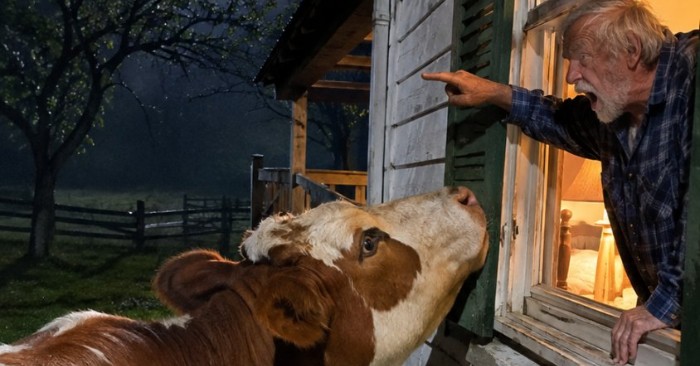
“Good heavens, Bella.”
He knew that stream.
It carried rainwater away from four neighboring farms before joining the river beyond the valley.
Now the channel was badly blocked.
Each night, runoff from the surrounding hills had been collecting behind the obstruction.
The old masonry was beginning to fail under the pressure.
If the channel gave way, a sudden surge of water could flood the low-lying farm road and several nearby buildings.
Walter carefully led Bella back toward higher ground.
Then he called the county emergency dispatcher.
Within an hour, firefighters and public works crews had arrived.
They closed the farm road, inspected the drainage system from a safe distance and warned nearby residents.
The next morning, engineers discovered the larger problem.
An old culvert downstream had partially collapsed months earlier.
Successive storms had carried branches, mud and fencing into the narrowed opening, gradually restricting the flow.
Nobody had noticed because the drainage channel ran through privately owned farmland and had not been inspected for years.
Walter watched the workers from his kitchen window.
Bella stood peacefully in the pasture, chewing hay.
“You knew something was wrong out there, didn’t you?”
Of course, nobody could prove what the cow had sensed.
She might have been reacting to unfamiliar rushing-water sounds, changes in the wet ground or something else entirely.
But her strange nighttime visits had brought Walter outside before the situation became worse.
Over the next several weeks, engineers repaired the damaged channel and removed the accumulated debris.
The county also discovered that several other drainage structures in the valley had been neglected.
Walter gathered his neighbors for a meeting.
Instead of waiting for another emergency, they agreed to establish a shared maintenance schedule and a simple rainfall-alert system.
Every farm received a map of the drainage routes, emergency contact numbers and a clear procedure for reporting blockages.
The county committed to regular culvert inspections.
And Walter volunteered the use of his old equipment shed as a meeting place for the local flood-preparedness group.
When a journalist asked whether Bella deserved a medal, Walter laughed.
“She’d probably eat it.”
The following spring, heavy rain returned.
This time, the drainage system worked as intended.
Water flowed safely through the repaired channel while farmers monitored conditions from higher ground.
No roads needed to close.
No buildings flooded.
One evening, Walter sat on his porch watching Bella graze.
“Well, girl,” he said, “looks like you’ve finally stopped knocking on my window.”
Bella lifted her head and gave a low moo.
Walter smiled.
“Good. Because next time, I’m answering on the first knock.”
The old cow hadn’t uncovered treasure or brought anyone a fortune. Her stubborn behavior had led a farmer to a problem his entire community had overlooked—and helped them prepare before the next dangerous storm.