That winter started like any other—cold mornings, quiet streets, and the steady rhythm of shoveling snow before the day began.
I didn’t plan on getting involved in anyone else’s routine.
But then I noticed Lois.
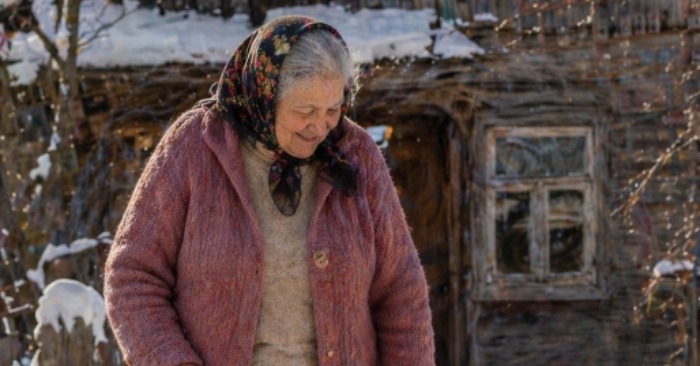
She lived a few houses down, an elderly woman who moved slowly, always with her cane, always accompanied by her tiny dog, Benny. One morning, as I stood at the end of my driveway catching my breath, I saw her door crack open. First the cane. Then her foot. Then Benny darted out, barked once at the freezing air… and retreated.
The snowbank at her steps was too high.
And Lois didn’t even try.
She just turned back inside.
Something about that moment stayed with me.
So instead of going back inside after finishing my own walkway, I dragged my shovel over to her house and started clearing a path. I didn’t knock. I didn’t ask. I just did it.
The next morning, I did it again.
And the morning after that.
Before long, it became our unspoken routine. I’d clear my snow, then hers, and head home feeling like something small but meaningful had been done.
We didn’t talk much.
Sometimes she’d nod from the window. Once she told me, “You don’t have to, Dako.”
“I know,” I replied. “That’s why I do it.”
A few days later, I found a thermos on my porch. Warm. Wrapped in a towel. When I opened it, the scent of spiced tea filled the air—cloves, cinnamon, something comforting.
No note.
But I knew it was from her.
My son Micah noticed it right away. Curious as always, he asked if we could give her something back. He sat at the kitchen table with his crayons and drew a picture—me, him, Lois, Benny, and a giant snow angel stretching across the page.
“It’s us,” he said proudly.
I slipped it into her mailbox the next morning.
For the first time in a while, everything felt… simple. Good. Like we were quietly building something kind without needing to say it out loud.
Then, two days later, everything shifted.
There was a piece of paper on my doorstep.
Stiff from the cold. Curled at the edges.
I picked it up and read the words, written in harsh, jagged block letters:
“NEVER COME AGAIN OR YOU’LL REGRET IT!! LOIS.”
My stomach dropped.
It didn’t sound like her.
Not even close.
I stood there for a long moment, trying to make sense of it. Then I went inside, grabbed my phone, and opened the doorbell camera footage.
What I saw made everything worse.
It wasn’t Lois.
A younger woman, wearing a brown coat, approached my door in the early morning darkness and left the note. She moved quickly, glancing around before disappearing out of frame.
After that, Lois vanished.
Her curtains stayed shut.
Benny stopped barking.
The house felt… empty.
A few days later, a man knocked on my door. He introduced himself as Paul—her great-nephew. He spoke in a controlled, almost rehearsed tone, telling me Lois needed “space,” that she wasn’t up for visitors, that I should stay away.
“You’re not family,” he added.
Not long after, the house was sold.
Just like that.
For weeks, I couldn’t shake the feeling that something was wrong. That Lois hadn’t left by choice. That whatever had happened, I had somehow been pulled into something I didn’t understand—and couldn’t fix.
Then, one afternoon, a blue envelope appeared in my mailbox.
The handwriting was unmistakable.
Lois.
Inside was a letter—careful, steady, but urgent.
She explained everything.
She had been moved into a care facility by relatives who were now controlling her contact with the outside world. They didn’t want her reaching out. Didn’t want anyone knowing where she was.
But she found a way.
In the letter, she told me about Benny.
He had been taken to a shelter.
She asked me—begged me—to find him.
She also mentioned something I never expected.
A small trust she had arranged for Micah.
She wrote that kindness like his—and mine—should be remembered.
That it mattered.
We went to the shelter that same day.
Benny recognized us immediately.
And a week later, we went to see Lois.
The moment she saw us, her face lit up in a way I’ll never forget.
Like sunlight breaking through after a long winter.
And in that moment, I realized something simple, but powerful—
Kindness doesn’t disappear.
Even when people try to take it away.
It finds its way back.