The break-in itself was bad enough. A rock through the window, glass everywhere, and the usual mess you expect after someone forces their way inside. But what really caught attention wasn’t the damage — it was something far stranger lying across the floor.
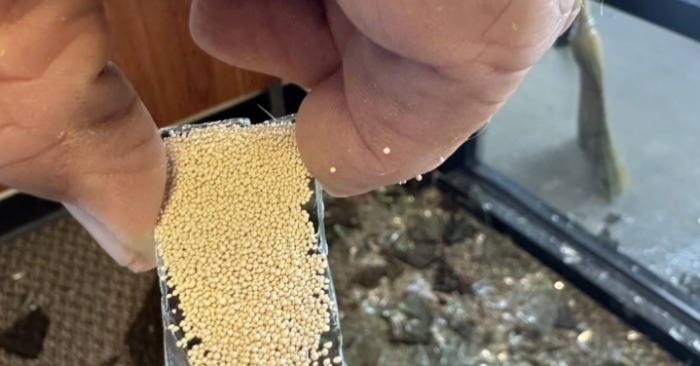
Scattered among the shattered glass were dozens of tiny, pale beads. Small, round, and oddly uniform. At first glance, they looked like grains — something like millet or seeds. They didn’t belong there. And that made the whole situation feel even more unsettling.
The office had clearly been targeted. The intruder had used a rock to break the window, and that rock was still there, sitting among the debris. Items were missing. Insurance would likely cover the loss, but that didn’t make it any less frustrating. Still, the real mystery wasn’t what was taken — it was what had been left behind.
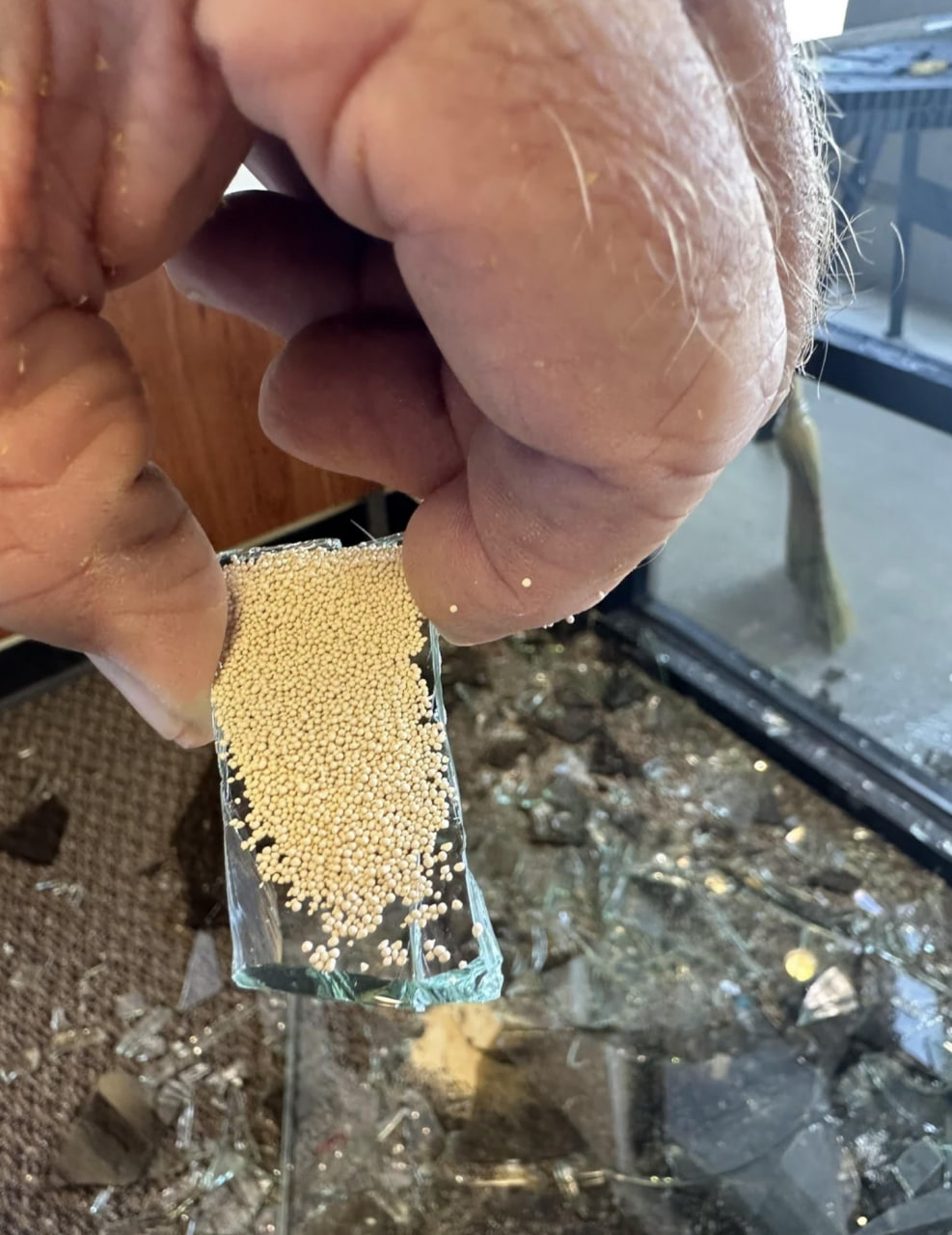
When the police arrived, even they paused at the sight of the beads. They examined them, tried to make sense of it, but had no immediate answers. No one could say what they were or why they were there. To be safe, everything was handed over — glass, beads, and all.
For a while, the question lingered.
Then the explanation finally came — and it had nothing to do with the intruder.
Those tiny beads weren’t planted. They weren’t evidence. They weren’t some strange calling card. They were inside the window the whole time.
Modern windows, especially double-pane ones, are more complex than they appear. Between the two layers of glass sits a thin spacer — a narrow frame that keeps the panes separated. Hidden inside that spacer are microscopic moisture-absorbing pellets known as desiccant beads.
Their job is simple but important. They absorb any moisture that sneaks between the glass layers over time, preventing fogging, cloudiness, or even internal mold from forming. Without them, the window would slowly lose its clarity and insulation.
When the rock hit the glass, it didn’t just shatter the surface. The impact broke the internal spacer as well, releasing those beads. Some clung to jagged edges of glass, while others spilled out and rolled across the carpet, creating that strange, grain-like scatter.
What looked suspicious was actually just hidden engineering exposed by force.
These beads are typically made from materials like silica gel, zeolite, or molecular sieves — all designed to trap moisture efficiently. They’re not toxic, but they’re not meant to be left out either. Especially in spaces where children or pets might come into contact with them, cleaning them up quickly is the safest move.
In the end, the mystery turned out to be far less dramatic than it first seemed. The beads had nothing to do with the break-in and offered no clues about who was responsible.
They were simply part of something most people never think about — the inside of a window.
Moments like this are a reminder that even the most ordinary objects can hide details we never notice. Until something breaks.
And while the burglary itself was a headache, it did leave behind one unexpected thing — a small, strange lesson about how everyday things are built.
As for anything actually suspicious? That would be someone suddenly selling a large stash of Ray-Ban or Costa sunglasses nearby. That’s the detail worth paying attention to.