The principal sat down beside Lili and carefully placed the newspaper clipping on the desk.
“That man in the photograph is me,” he said quietly.
I stared at him in disbelief.
He explained that the partially cut-off photograph had been taken at a charity concert twelve years earlier. At the time, he was working as a music teacher, and Lili’s biological father, Péter, had been one of his most talented students.
“Your parents were extraordinary people,” he told the little girl. “Your father played music, and your mother sat in the front row at every one of his performances.”
Lili lifted her head.
“Did they like music?”
The principal smiled.
“Very much. And your daddy once wrote a song that he never finished.”
Then he fell silent.
“Twelve years ago, he entrusted me with a small wooden box. He said that if he ever had a child, he wanted that child to have it. At the time, he hadn’t even met your mother yet.”
I felt tears gathering in my eyes.
“Why didn’t you give it to her?”
“Because years later, after the accident, we lost contact with the family. I had no idea where their little girl had ended up.”
Lili squeezed my hand.
The following day, the principal invited us into his office. On the desk stood a small, worn wooden box.
Inside were an old audio recording, several photographs, and a handwritten letter.
The letter was written in Péter’s handwriting.
“If I ever have a child, I want them to know that I was already thinking about them before they were even born. I don’t know what kind of father I’ll be, but I hope I’ll always have the courage to show my child just how much I love them.”
Lili began to cry.
“Did he really write this for me?”
“He couldn’t have known yet that you would be his child,” the principal replied. “But he meant it for you.”
Then he played the recording.
We heard a young man playing the piano. Occasionally, he hit a wrong note, laughed softly, and started again.
At the end of the recording, he spoke.
“One day, I’ll play this for my child.”
Lili snuggled against me.
For a long time, neither of us said a word.
A few days later, the teacher personally apologized to my little girl in front of the entire class.
“I was wrong, Lili. Your family photograph absolutely belongs here. I’m sorry I hurt you.”
The following week, the children redid their family project. This time, everyone was allowed to bring as many photographs as they wanted.
Lili placed three pictures on her poster.
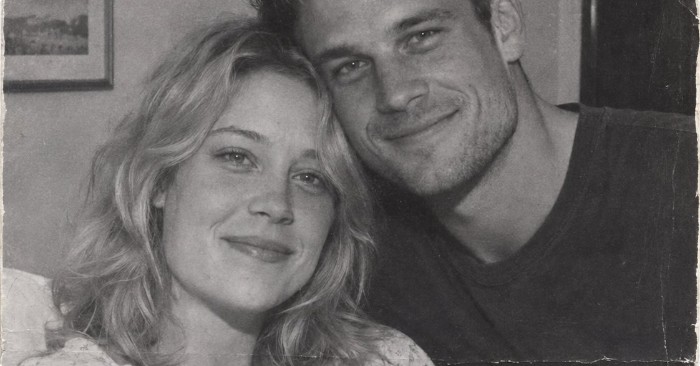
In the first, her biological parents were smiling.
In the second, we were standing beside her on the beach.
In the third, the principal was sitting at an old piano with her father.
When I asked why she had chosen all three, she answered:
“Because every picture shows people who loved me. Even if not all of them could stay with me.”
That evening, for the first time, she spoke about her biological parents with a smile instead of sadness.
And I understood that a child’s family isn’t made complete simply because everyone is sitting together around the same table.
It’s made complete when nobody tries to erase from their story the people who once loved them.