At first, it sounded like nothing important — just a light tapping against glass. But the noise kept repeating, steady and deliberate, until it caught someone’s attention at the emergency entrance.
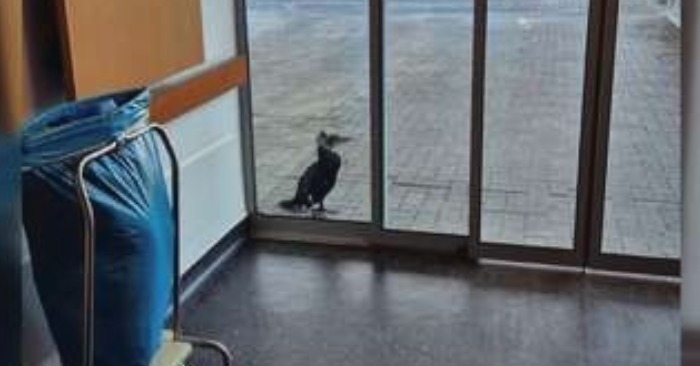
When staff looked outside, they were met with a completely unexpected sight. A cormorant stood right at the door, unusually close to the building. It wasn’t just passing by. The bird kept striking the glass with its beak, almost as if it was trying to communicate something.
People gathered nearby, unsure how to react. Situations like this simply don’t happen in a hospital setting. Doctor Cihat Cirit, who has worked in the department for over fifteen years, admitted he had never seen anything remotely similar. A colleague had warned him about the strange visitor, but even that didn’t prepare him for what he saw.

The bird didn’t back away. It stayed right there, focused, persistent, and visibly agitated. Its behavior felt purposeful, not random. That alone was enough to make everyone pause and look more closely.
As staff approached, they noticed something was off. The way the bird held its head, the tension in its movements — it wasn’t behaving like a healthy animal. Something clearly wasn’t right, but getting close proved difficult. The cormorant was frightened and kept its distance.
Realizing they needed proper assistance, the team called firefighters. With careful handling and patience, the bird was finally secured without causing further stress or injury.
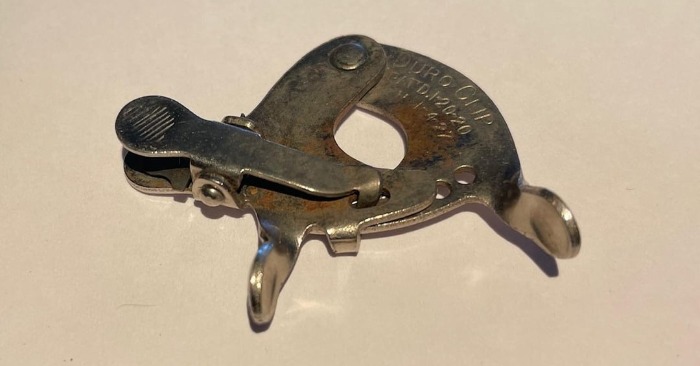
Only then did the full extent of the problem reveal itself. A fishing hook had become lodged deep in the lower part of the beak, with three curved barbs embedded in a way that made removal delicate and risky.
Step by step, the barbs were removed, and doctors were able to extract the remaining metal. The bird was treated immediately, and attention shifted to making sure it could recover safely.
Once everything was done, the cormorant was released into a nearby park behind the hospital. It didn’t hesitate — it moved back toward its natural environment, leaving behind a moment that no one present would forget anytime soon.
Fabian Lieber, head of the emergency department, later reflected on the encounter. He said it’s impossible to know whether the bird understood where it had arrived, or if it was simply chance. But what happened next left a strong impression — sometimes, help appears in the most unexpected ways.
Cormorants are commonly found near water — lakes, rivers, and coastlines across the globe. Their feathers aren’t fully waterproof, which is why they’re often seen perched with wings spread wide, drying in the sun. But on this day, one of them stood somewhere very different — right at the door, refusing to be ignored.