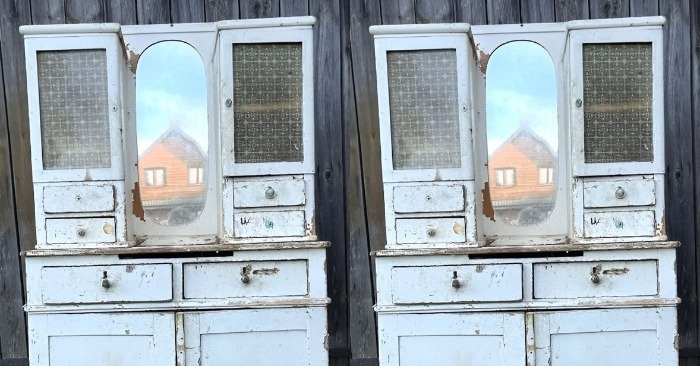
When I first saw this old, worn-out wardrobe, my hands dropped. Peeling paint, cracked doors, broken fittings, scratches, and chips—everything indicated that the furniture had long been written off. But inside, I felt the desire to try to restore its dignity and give it a second life. The photo clearly shows how “veteran” the wardrobe looked before restoration — and how elegant it became after renovation.
Below is a detailed plan of how, step by step, I turned what was almost junk into a stylish, neat, and practical piece of furniture.
Step-by-step restoration of an old cabinet
1. Inspection and disassembly

First, I carefully checked the entire body for rot, deep cracks, or loose elements. I removed everything that could be removed—doors, handles, drawers—so that I could work on each detail separately.
2. Removal of old paint
I completely removed the old coating with a spatula and sandpaper. In some places, the paint had been applied in several layers, so I had to clean the surface twice.
3. Sanding
After rough processing, I went over all surfaces with a sander. This leveled the wood, removed irregularities, and prepared the base for a new coating. The material became smooth and pleasant to the touch.
4. Wood restoration
I filled cracks, dents, and chips with a special wood filler. After it dried, I sanded it lightly again. I decided not to paint some elements (shelves, parts of boxes) but to highlight them with wood stain to preserve their natural texture.
5. Primer
I applied primer to the parts that I planned to paint. This ensured an even color and good adhesion. The primer dried fairly quickly.
6. Painting
I chose a calm light gray tone for the cabinet. I applied two coats of paint, allowing each to dry thoroughly. I covered the natural wood elements with protective oil to preserve the texture and give the wood a warm tone.
7. New hardware
The old handles were too damaged, so I replaced them with new ones — minimalist and neat. For the drawers, I chose vintage-style metal handles.
8. Working with the mirror and doors
I thoroughly cleaned the mirror and repainted the frame around it. I left the decorative mesh inserts on the doors, just refreshing them slightly.
9. Final assembly
When everything was dry and ready, I put the cabinet back together. In its place was no longer old, dilapidated furniture, but a renovated, harmonious, and stylish piece — as if bought from a good furniture store, but with history and character.
The result

The “before” and “after” comparison shows how far this old piece of furniture has come. From a scratched, tarnished, and almost useless cabinet, it has been transformed into a beautiful and durable piece of furniture that now occupies a worthy place in my room.
This kind of work not only saves money, but also brings amazing pleasure. Each brushstroke seemed to restore the cabinet’s lost beauty.
If you have a similar antique item at home, don’t rush to throw it away. A little patience, effort, and imagination can work wonders.