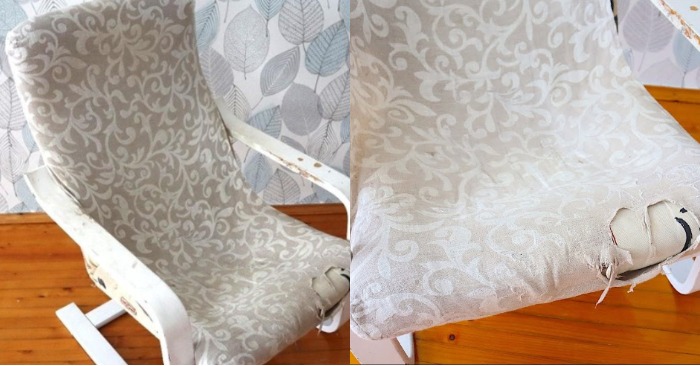
Most people would have dragged this old chair straight to the trash without thinking twice. Worn fabric, layers of old paint, signs of age everywhere. But one woman saw something completely different.
Vintage armchairs like this are becoming harder and harder to find. Modern furniture may look stylish, but many newer pieces barely survive a few years before falling apart. This chair, however, was built differently.
The Scandinavian-style armchair originally came more than twenty years ago. It was lightweight, cozy and designed in a way that gently rocked thanks to its flexible frame. Comfortable enough that guests always wanted to sit in it first.
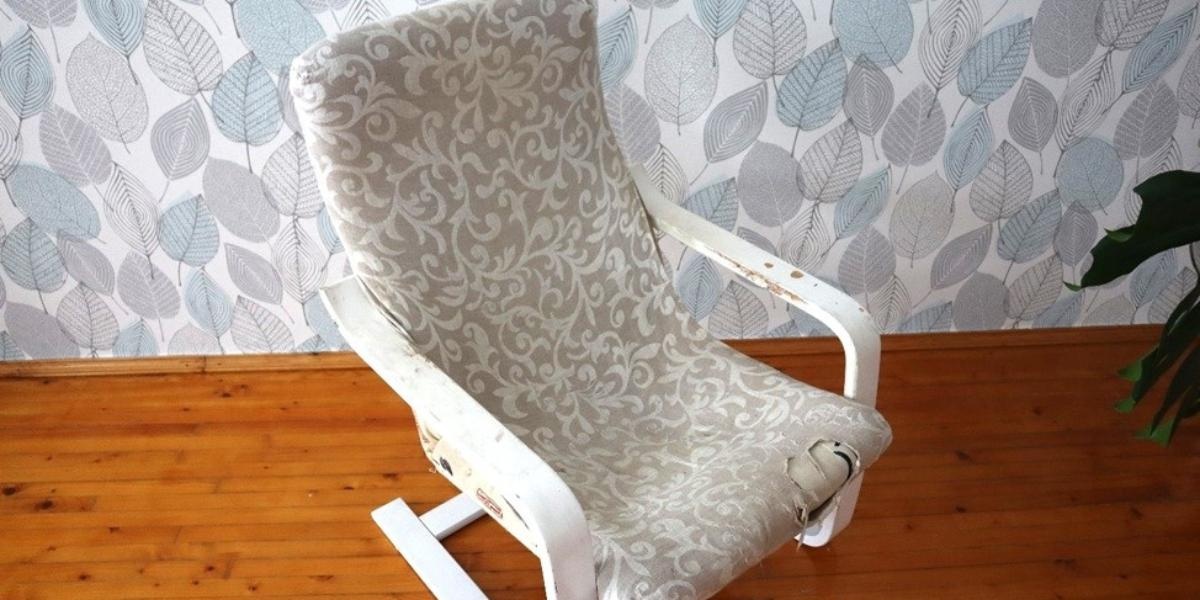
For years, the chair stood in her friend’s home. Every visit ended the same way — she would settle into that exact chair and never want to get up.
Then came the surprise.
Her friend decided to replace old furniture and planned to get rid of the chair completely. Instead of watching it disappear, she immediately took it home and decided to give it a second life.
Despite its age, the frame was still incredibly solid. The only real problem was appearance. The wood had been repainted several times over the years, and the upholstery looked heavily worn and dirty.
When they started taking it apart, they discovered the whole chair was actually held together with just four bolts and separated into two sections.
She began with the frame. At first, she tried sanding the old paint away, but there were simply too many layers. In the end, she used a special paint remover instead.
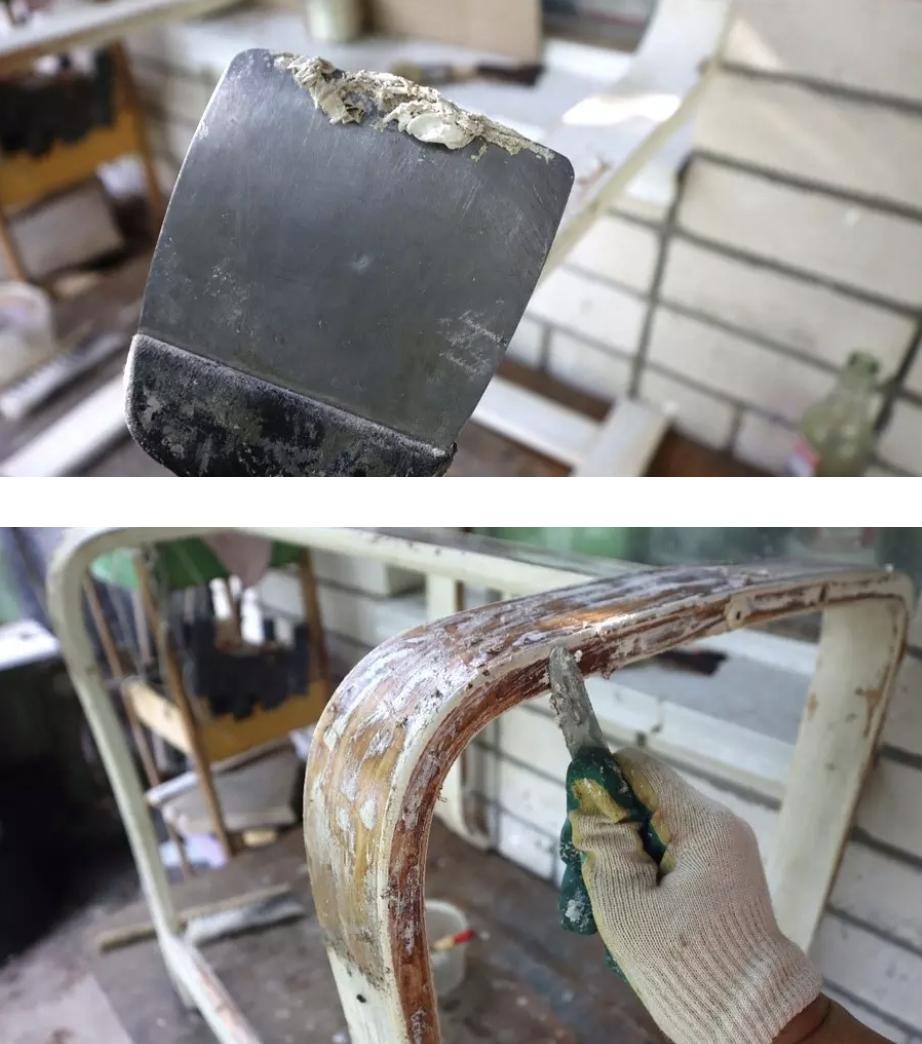
Within minutes, the thick old coating started bubbling and peeling off almost on its own. About an hour later, every trace of old paint was gone.
After stripping it down completely, she washed the entire frame thoroughly using a brush and laundry gel before rinsing everything with a hose outside. Thanks to the chair’s simple construction, the water drained quickly, and by the next morning the frame was already dry.
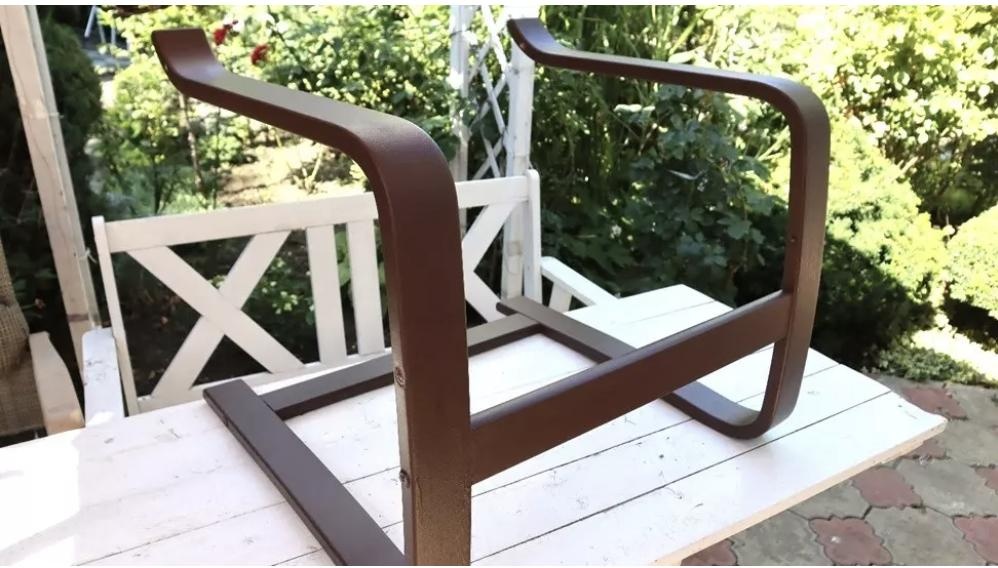
To repaint it, she chose a dark brown floor paint. The coating went on smoothly from the very first layer, dried quickly and left no visible streaks behind.
The biggest challenge turned out to be the upholstery.
The old fabric had once been sewn directly onto the metal tubes, making it extremely difficult to remove cleanly. After thinking it through for a long time, she came up with another idea — creating a brand-new slipcover similar to a pillowcase.
She carefully measured the width and length of the seat, leaving extra space for the thickness of the cushion. To make the final result look more stylish, she combined different sections of fabric and added decorative folds where the chair bends.
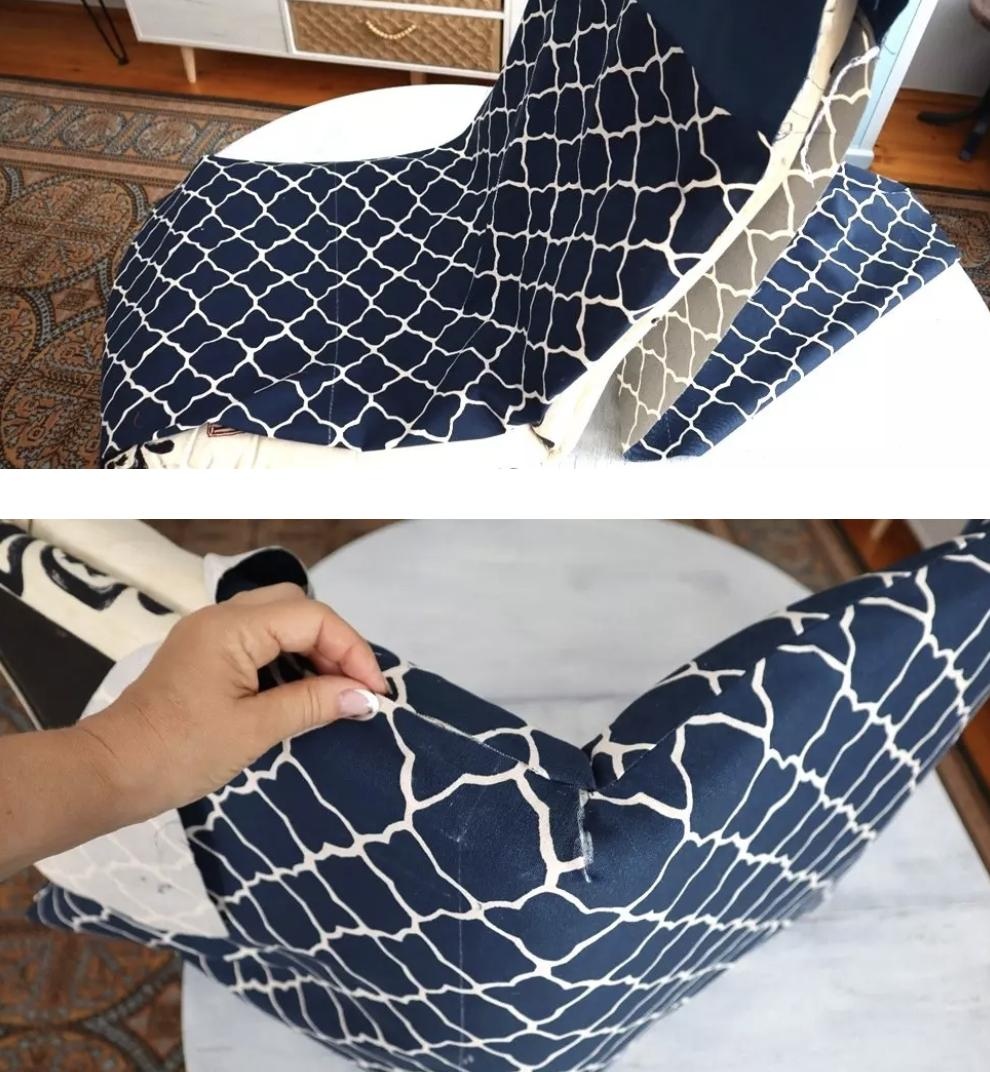
Underneath the seat, she created an overlapping closure similar to pillow covers before sewing it shut by hand. The most important part was making sure the fabric hugged the chair tightly without slipping.
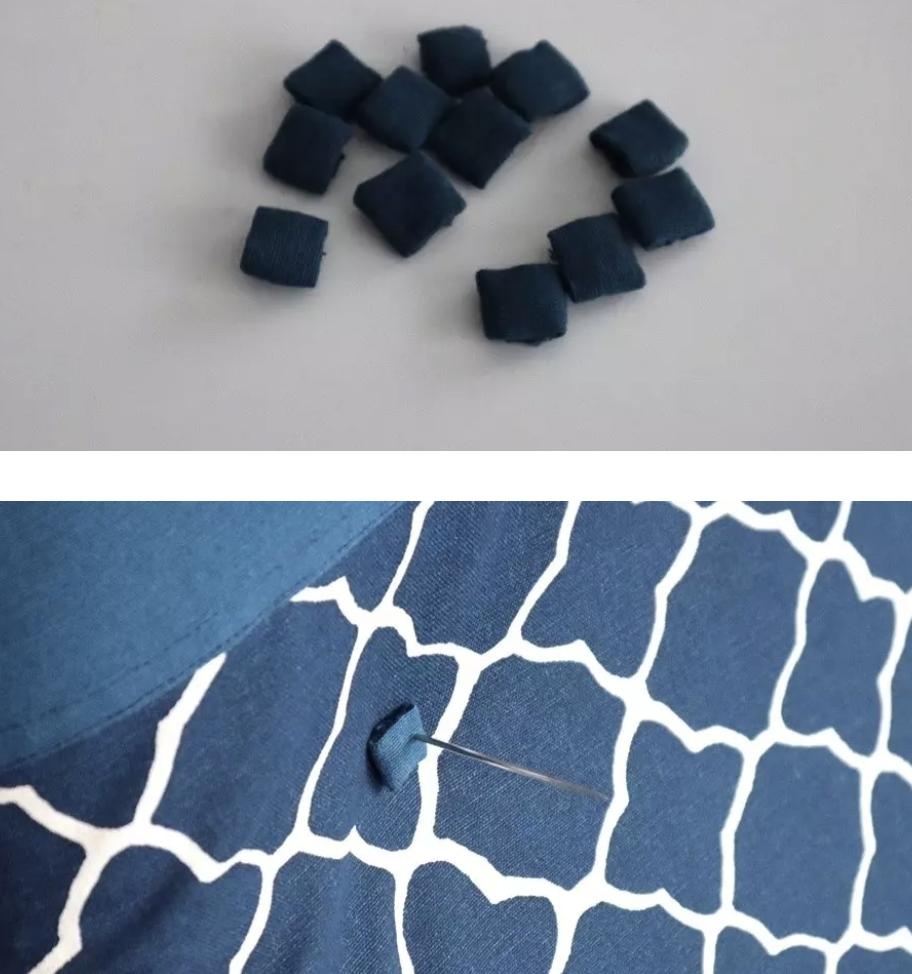
Using leftover material, she also cut small fabric squares and attached them to both sides, securing the cover firmly to the frame with a large upholstery needle.
In the end, the entire restoration turned out much easier than expected.
Once the chair was fully assembled again, it looked almost brand new — as if it had just arrived from a furniture showroom instead of surviving two decades in someone’s home.
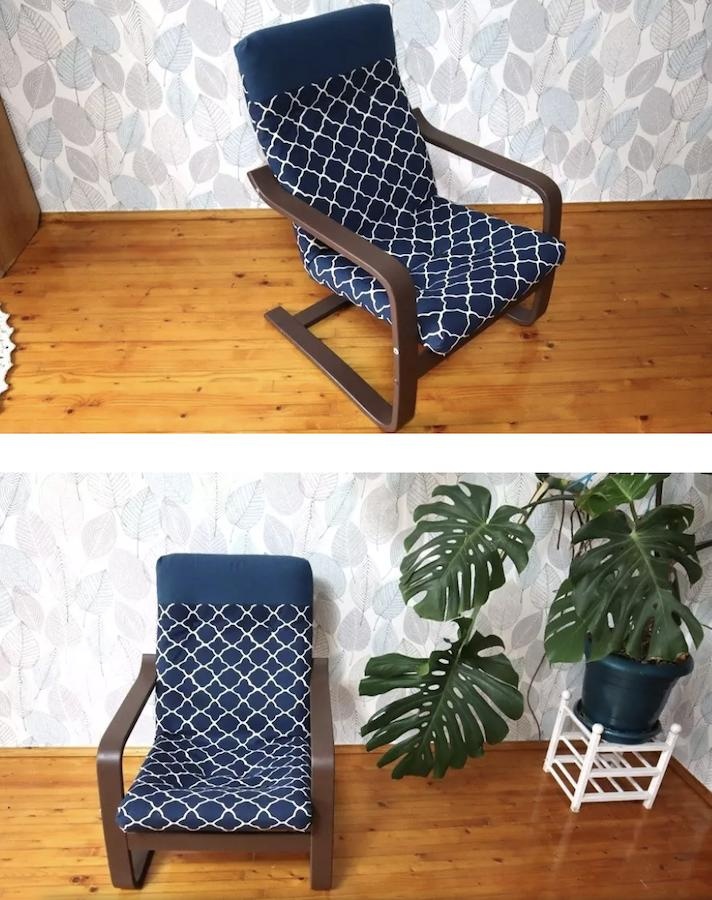
And the funniest part?
Now whenever her friend visits, she immediately sits in that same chair again — the very one she almost threw away herself.